
Ain’t That A Kick In The Head?
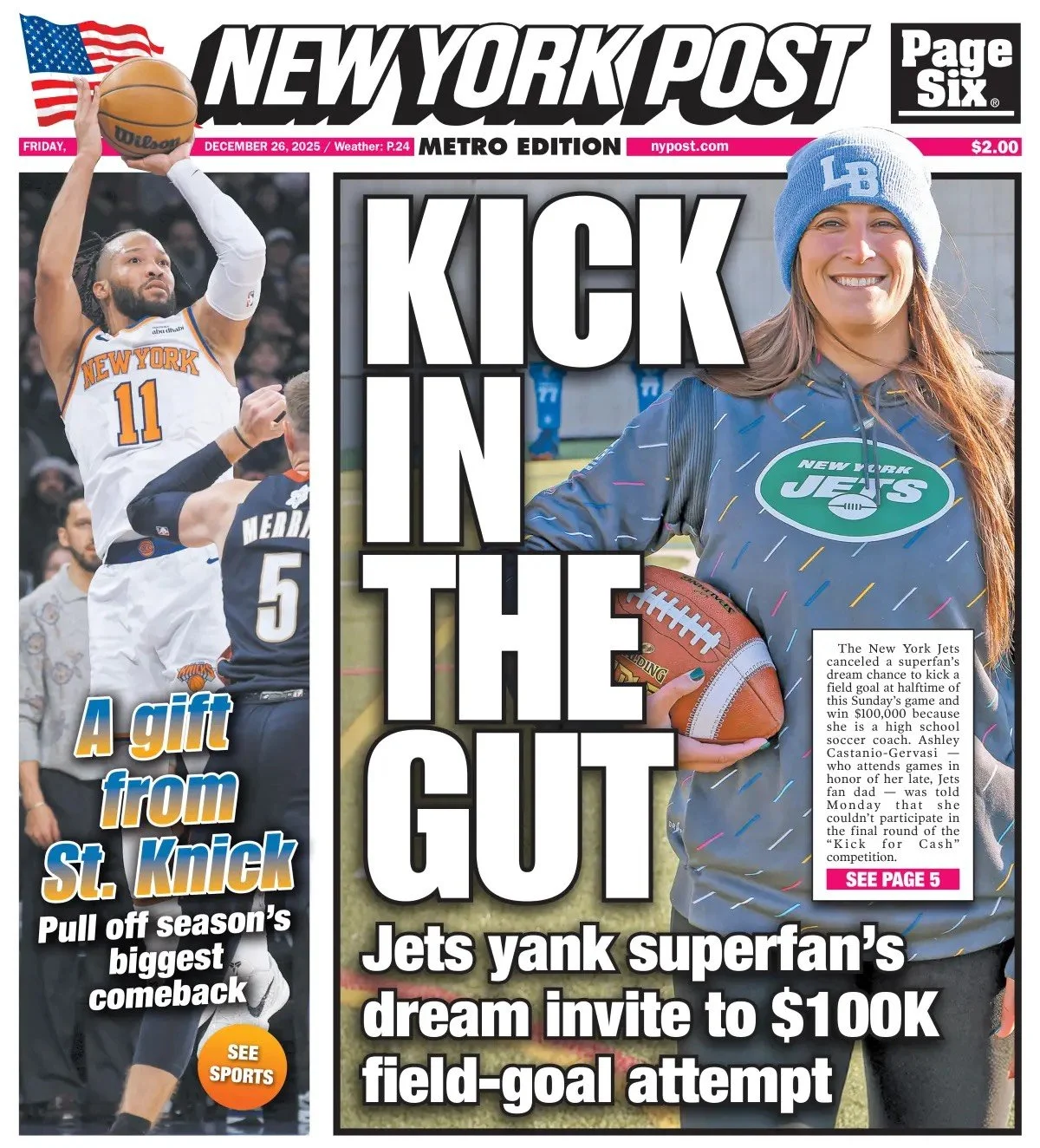
On Sunday, New York Jets super fan Ashley Castino-Gervasi attempted a 30 yard field goal as part of a halftime contest, with a chance to $100,000.
The kick barely missed the uprights.
A result that usually would have drawn jeers from the crowd was suddenly met with cheers.
In the fifteen years since the New York Jets last made the playoffs, it’s been hard for many fans to find something to bond over outside of shared misery. A contest like this would largely be a footnote in yet another loss for the Jets, if it even does get mentioned. Yet, this halftime contest had taken on another life in the 72 hours before Ashley even made her kick.
Ashley had been attending New York Jets for most of her life. Her late father was a devotee to the team and would get his daughter initiated into Gang Green alongside him. She estimated with the New York Post’s Alex Mitchell that her family has given the team up to $1 million dollars over the course of the years.
Her father passed from esophageal cancer in 2011, and his family has since devoted their free time to raising funds for research.
Ashley initially qualified for this contest, after participating in a similar event at a tailgate in October. She already had plans to use the winnings from the contest toward a house while donating the rest to the Esophageal Cancer Education Foundation, a foundation that her family has already raised $50,000 for.
However, a small insurance clause in the waiver that Ashley had signed would surface 72 hours before the contest. Due to the fact that Ashley was a former collegiate athlete at Stony Brook (2010-14) and currently serves as a high school soccer coach at Long Beach High School, she was going to be disqualified as a contestant because of a perceived advantage over her competitors.
Thanks to the reporting of Alex Mitchell and the New York Post, this story went viral, garnering more ire for an already moribund franchise. It wasn’t until enough public scrutiny from this story forced the Jets’ hand to reinstate Ashley into the competition just a day before the game.
Even though the kick didn’t convert, the fact that enough public pressure from fans and media outlets was heartening for Ashley.
“It was crazy. People are asking to take pictures with me,” she told Alex Mitchell of the New York Post in a follow up article.
A dejected Gang Green fan is even heard shouting, “Give us something to cheer about!” as the ball misses its target, in a video of the kick.
“One season ticket holder in there said he read my story and called the Jets. He was going to give up his season tickets and had others ready to do the same.”
“It makes you really proud of this fanbase … even though times get tough, we still support each other, support this team, and it really does bring people together.”
Again, this story is not about the kick. This is about something far deeper that has been affecting the sporting world for quite some time.
There has been an obsession with the word “fandom” over the last couple years. Corporations are waxing poetically about the relationship they have with their consumers, without even understanding the power their customer base has. It’s just sharing memes with your product crudely placed in and having your social media be “hip with the kids”, right? Just write a couple of takeaways for your LinkedIn post and accept your “fandom expert” certificate on the way out.
At some point in this lecture, they’ll bring up sports teams as an example of fan and company living in harmony. They’ll point to the shared history and devotion to the ol’ town team and make that their North Star.
What they fail to discuss is how the relationship between sport team and fan is currently broken in multiple areas. The relationship between fan and team has always been viewed as “transactional”, with fans giving away more and more of themselves to participate in this community. Focused too much on fulfilling their own needs, teams will eventually forget the needs of the other party in this relationship.
This project was started almost two years ago to explore how sports fandom can be used to build better communities. Examples like what just unfolded this weekend showcase why we need to collectively look for ways to empower fans to have more of a say in their relationship with their team and for the teams to understand fandom as something earned, not expected.
As we approach a new year, I hope to research more of these ways sports fandoms can grow and I would love to have you along for the journey. If you work on the team side, fan side, or just participate in some capacity, any and all support is welcome.
Until next time, I’m Matthew Barry, and I’ll see you next time to see what else we can find in the Heart of a Fan. Thanks for reading.